Life on Earth has never been permanent. In fact, scientists estimate that around 99% of all species that have ever existed are now extinct. From ancient ocean-dwelling trilobites to vast prehistoric forests, most organisms that once flourished have disappeared.
Extinction is not an anomaly. It is a defining feature of Earth’s history. Long before humans emerged, shifting climates, drifting continents, volcanic eruptions, and asteroid impacts repeatedly reshaped life on this planet. What remains today is only a snapshot in a story billions of years in the making.
Extinction as a Natural Process
The idea that extinction is unusual is a misconception. In reality, extinction is part of evolution itself.
Most species survive for only a few million years. Over time, environmental pressures, competition for resources, disease, and gradual climate change reduce populations. Eventually, many lineages disappear.
This cycle has repeated for over 3.5 billion years.
Why Species Disappear
Several forces drive extinction:
- Climate change over geological timescales
- Continental drift altering oceans and habitats
- Volcanic activity releasing massive greenhouse gases
- Asteroid impacts causing rapid global cooling
- Evolutionary competition from better-adapted species
Extinction clears ecological space. In many cases, it allows new species to emerge and diversify.
The Five Major Mass Extinctions
While extinction happens continuously, Earth has experienced five catastrophic mass extinction events. These were periods when a large percentage of global species vanished in relatively short geological timeframes.
1. Ordovician–Silurian Extinction (About 444 Million Years Ago)
Triggered by severe global cooling and falling sea levels, this event wiped out many marine species.
2. Late Devonian Extinction (About 375 Million Years Ago)
Oceanic changes and reduced oxygen levels led to significant losses in marine biodiversity.
3. Permian–Triassic Extinction — “The Great Dying”
The most devastating extinction event occurred roughly 252 million years ago.
It is often called “The Great Dying” because:
- Around 90% of marine species vanished
- Approximately 70% of land vertebrates disappeared
- Entire ecosystems collapsed
Massive volcanic eruptions in what is now Siberia released enormous amounts of carbon dioxide. This triggered extreme global warming, ocean acidification, and widespread ecological failure.
The planet was nearly sterilized.
4. Triassic–Jurassic Extinction (About 201 Million Years Ago)
This event paved the way for dinosaurs to dominate the planet.
5. Cretaceous–Paleogene Extinction (66 Million Years Ago)
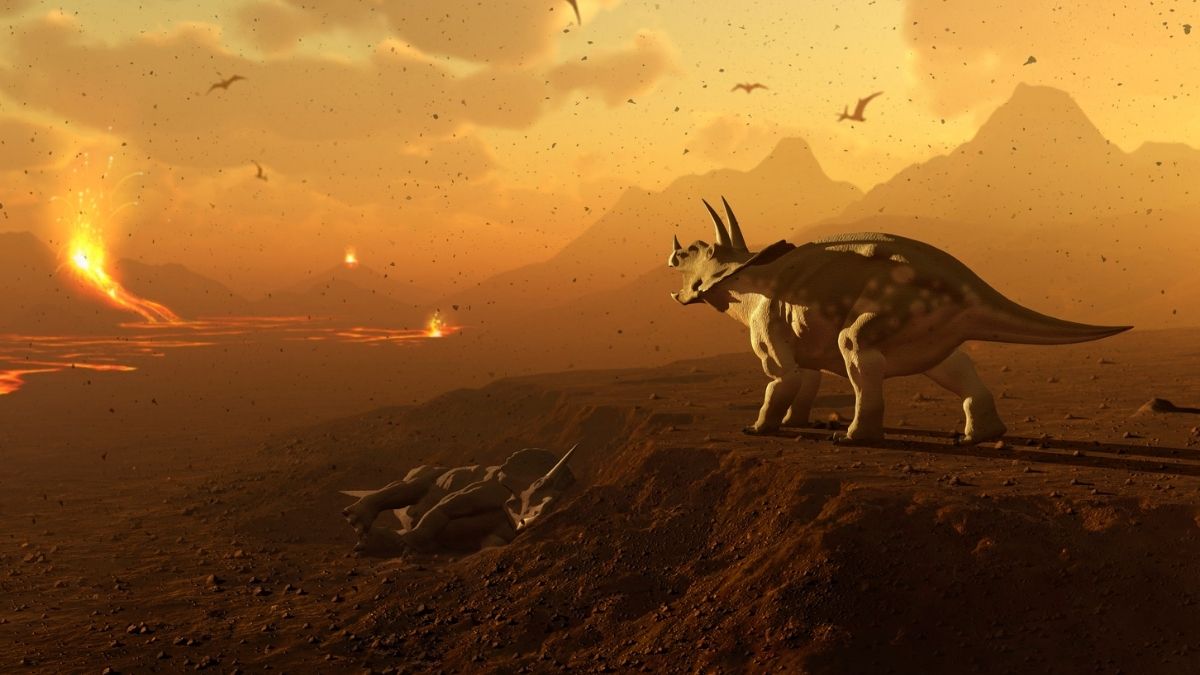
A massive asteroid impact ended the age of non-avian dinosaurs. Mammals later diversified, eventually leading to humans.
Each time, life rebounded.
The Fossil Record: A Partial Window Into the Past
Our understanding of extinction relies heavily on fossils. Yet fossilization is rare.
To become a fossil, an organism must:
- Be buried quickly
- Avoid scavengers
- Be preserved under specific geological conditions
As a result, the fossil record represents only a fraction of all life that ever existed.
Countless species disappeared without leaving a trace.
This means the true history of life is far richer and more complex than what we currently know.
Trilobites and Lost Worlds
Among the most iconic extinct organisms are trilobites, marine arthropods that thrived for over 270 million years before vanishing in the Permian extinction.
Similarly, the Carboniferous period was dominated by vast swamp forests filled with giant ferns and towering lycopods. These ecosystems eventually transformed into the coal deposits that fuel modern industry.
Entire biological worlds rose and fell long before humans arrived.
Evolution Through Collapse and Renewal
One of the most remarkable features of Earth’s history is resilience.
After every mass extinction, biodiversity eventually recovered. New species evolved, filling ecological niches left vacant by extinct organisms.
For example:
- After the Permian collapse, reptiles diversified
- After the dinosaur extinction, mammals expanded rapidly
- Coral reefs rebuilt after catastrophic die-offs
Life does not simply end. It reorganizes.
The concept is sometimes described as “creative destruction” in evolutionary terms. Extinction reshapes the tree of life, pruning branches while allowing new growth.
The Fragility of Biodiversity
Although extinction is natural, it also highlights how fragile life can be.
Species depend on delicate environmental balances. Small shifts in temperature, ocean chemistry, or atmospheric composition can trigger large-scale changes.
Today’s biodiversity represents only the latest chapter in this ongoing evolutionary experiment.
Humans are part of that story.
The ecosystems we see today evolved through repeated cycles of collapse and renewal. Understanding deep-time extinction helps us appreciate both the resilience and vulnerability of life.
What the Science Says
Paleontologist David M. Raup, in his book Extinction: Bad Genes or Bad Luck?, explored whether extinction is driven more by internal biological weakness or external catastrophic events.
His conclusion suggests a combination of both.
Sometimes species decline gradually due to competition or limited adaptability. Other times, sheer bad luck, such as a massive asteroid impact, determines survival.
Extinction is rarely simple.
Why 99% Extinct Does Not Mean Failure
The fact that 99% of species have gone extinct may sound alarming. But from a geological perspective, it is normal.
Life on Earth is not static.
It is dynamic, adaptive, and constantly evolving. The organisms alive today, including humans, are temporary participants in a process that began billions of years ago.
Every living species represents a lineage that survived immense environmental challenges.
FAQ
Why have 99% of species gone extinct?
Because extinction is a natural part of evolution. Most species exist for only a few million years before environmental pressures or competition lead to their disappearance.
What was the worst mass extinction in history?
The Permian–Triassic extinction, known as the “Great Dying,” was the most severe, eliminating the majority of marine and terrestrial species.
How reliable is the fossil record?
The fossil record is incomplete. Fossilization is rare, meaning many species vanished without leaving physical evidence.
Do mass extinctions permanently destroy life?
No. While devastating, mass extinctions are followed by periods of evolutionary recovery and diversification.
Are extinctions still happening today?
Yes. Extinction continues as part of natural processes, although modern biodiversity trends are influenced by human activity.
Conclusion: Earth’s Story Is Still Being Written
The extinction of 99% of species is not merely a statistic. It is a reminder of Earth’s vast, ever-changing history.
From trilobites to dinosaurs, from ancient forests to modern ecosystems, life has repeatedly adapted to dramatic transformations.
Understanding extinction helps us see the bigger picture. Biodiversity is both resilient and fragile. The story of life is ongoing, and we are part of its latest chapter.
For more deep-space and Earth science insights, explore our related coverage on planetary evolution and natural history at Arab Forecast 247.