Photo Credit : NCM
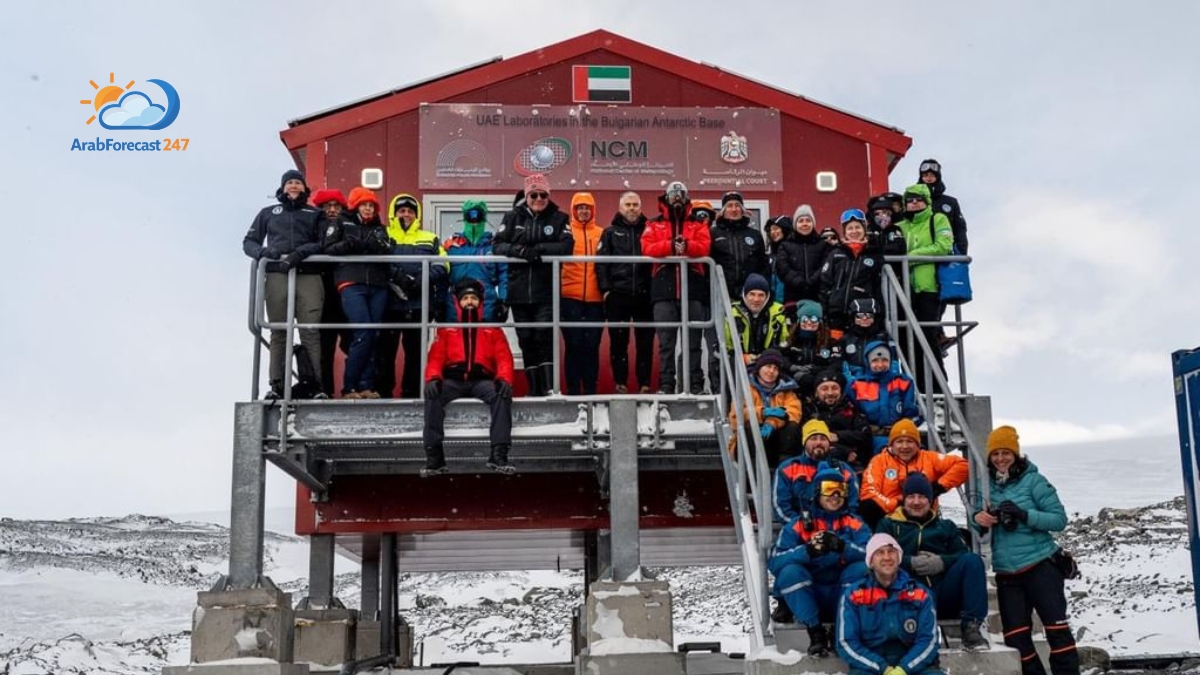
The UAE has officially marked a historic milestone in global climate science as the National Centre of Meteorology (NCM) announced the successful return of its second scientific team from the frozen frontiers of Antarctica. This mission (2025–2026) represents a giant leap for the Emirates Polar Programme, transitioning the nation from a participant to a key infrastructure provider in polar research.
A New Era: First Emirati Laboratories in Antarctica
The core achievement of this expedition was the inauguration of the first-ever UAE research laboratories at the Bulgarian Antarctic Base on Livingston Island. Unlike previous missions that focused primarily on data collection, this move establishes a permanent physical workspace for Emirati scientists.
Working in coordination with the Bulgarian Antarctic Institute and academic powerhouses like Khalifa University and Abu Dhabi Polytechnic, the technical team including Ahmed Al Kaabi, Badr Al Ameri, Omar Al Attas, and Abdullah Al Raisi overcame extreme conditions to ensure these facilities were fully operational.
Key Infrastructure and Data Milestones
The 2025–2026 mission wasn’t just about building structures; it was about precision monitoring. The team successfully deployed and upgraded critical hardware:
- Tidal Monitoring: Installation of the UAE’s first tidal station to track sea-level fluctuations.
- Meteorological Expansion: A second UAE weather station was installed to broaden the data grid.
- Seismic and Atmospheric Research: Upgrades were made to existing seismic stations to enhance the quality of data shared with international monitoring networks.
- Climate Modeling: The instruments will provide high-fidelity data essential for understanding global sea-level rises and geophysical shifts.
Global Impact and Science Diplomacy
Mariam bint Mohammed Almheiri, Chair of the Steering Committee of the Emirates Polar Programme, noted that these laboratories serve as a “strategic milestone” in science diplomacy. This sentiment was echoed by Dr. Abdulla Al Mandous, Director General of the NCM and President of the World Meteorological Organization (WMO), who emphasized that the high-quality data generated in Antarctica is vital for the global research community.
Expert Insight: While the UAE is famous for managing the Shamal the northwesterly winds that bring dust and cooling to the Arabian Peninsula the research conducted in Antarctica is intrinsically linked to our local weather. Polar melt directly influences global current systems, which can eventually shift the intensity of regional patterns like the Shamal or the heat-inducing Khamsin winds.
Why This Matters for ArabForecast247 Readers
Understanding the “Ends of the Earth” is crucial for predicting the future of the Middle East’s climate. By investing in polar research, the UAE is ensuring that our regional weather models are backed by first-hand data from the world’s most sensitive climate regulator: the Antarctic ice sheet.