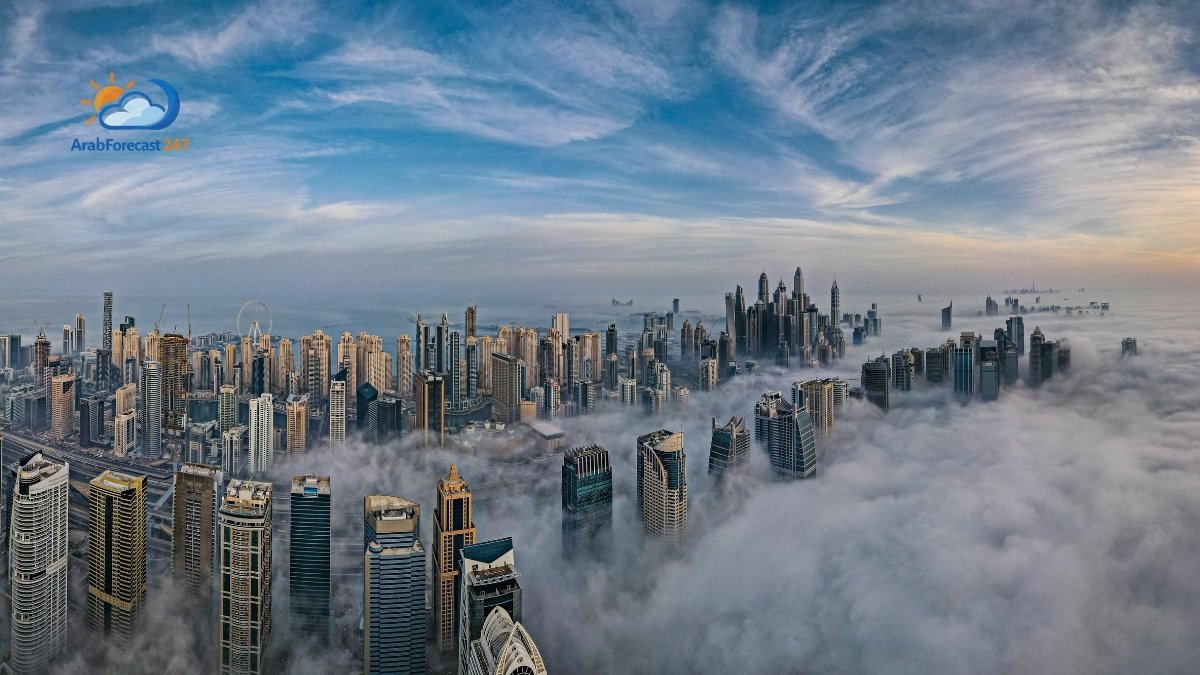
Residents and commuters in the United Arab Emirates are being urged to prepare for a significant atmospheric event tonight. The National Center for Meteorology (NCM) has issued an urgent weather advisory, warning that a blanket of dense fog is set to descend upon several parts of the country, primarily impacting the western regions.
This isn’t just a light morning haze; the NCM predicts that horizontal visibility could deteriorate to zero meters in certain corridors. The window for this weather event is expected to begin tonight, Tuesday, February 17, at 9:30 PM, and persist until Wednesday, February 18, at 10:00 AM.
Understanding the “Radiational Fog” Phenomenon
In the UAE, particularly during this time of year, we often experience what is known as Radiational Fog. This occurs when the ground cools rapidly after sunset, chilling the moist air directly above it to the dew point. Given the current lack of strong Shamal winds (the northwesterly winds that usually keep the air moving), the atmosphere remains stagnant, allowing the fog to thicken and sit heavily over the coastal and internal western plains.
Critical Safety Guidelines for Motorists
Driving in near-zero visibility is one of the most hazardous conditions a motorist can face. To ensure your safety and the safety of others on the road, please adhere to the following protocols:
- Follow Variable Speed Limits: During fog events, Abu Dhabi and other emirates often activate “modified speed limits” on electronic road signs (usually 80 km/h). These are legally binding and monitored by radars.
- The “Low Beam” Rule: Never use your high-beam headlights in fog. The water droplets reflect the bright light back into your eyes, actually worsening your visibility. Stick to low beams and dedicated fog lights.
- Avoid Hazard Lights While Moving: Hazard lights should only be used if you are completely stopped on the shoulder. Using them while driving makes it impossible for the person behind you to know if you are braking or turning.
- Increase Following Distance: At $80 \text{ km/h}$, your stopping distance is significantly higher on damp, fog-slicked roads. Double the gap between you and the vehicle ahead.
What to Expect Tomorrow Morning
The fog is expected to burn off by mid-morning on Wednesday as the sun begins to heat the earth’s surface, breaking the temperature inversion. However, travelers heading toward Al Dhafra or using the Sheikh Khalifa bin Zayed Highway (E11) should anticipate delays and potential road diversions during the early morning rush.