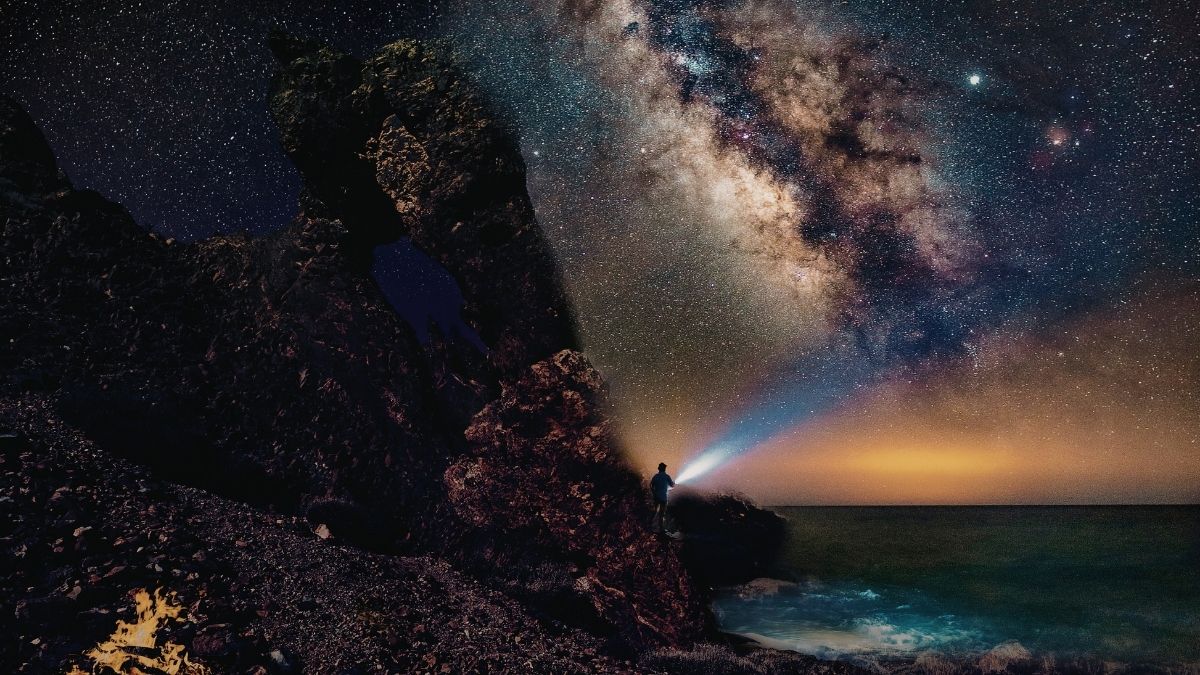
The desert skies above Wadi Rum are among the clearest in the Middle East. During winter, atmospheric conditions become even more favorable for stargazing, making the region one of the best natural observatories in the MENA region.
Cold desert air, low humidity, and minimal light pollution combine to produce exceptionally sharp night skies. Visitors and astronomers often report seeing the Milky Way, meteor showers, and deep-sky constellations with remarkable clarity.
Winter Weather Conditions in Wadi Rum
Winter nights in Wadi Rum are significantly cooler than daytime desert temperatures. This temperature drop plays an important role in improving sky visibility.
Typical winter conditions include:
- Night temperatures: 2°C to 8°C
- Daytime temperatures: 14°C to 20°C
- Relative humidity: 20–40%
- Very low cloud cover due to stable desert air masses
Cold air holds less moisture. With fewer water particles in the atmosphere, there is less scattering of light, allowing stars and galaxies to appear brighter and sharper.
Why Cold Desert Air Improves Sky Clarity
Winter air masses moving across southern Jordan often originate from the eastern Mediterranean or continental regions. As they pass over desert terrain, they become dry and stable.
This produces ideal astronomical conditions such as:
- Low atmospheric turbulence
- Minimal humidity
- High transparency of the night sky
- Reduced haze compared to coastal areas
Unlike cities near the Mediterranean coast, the inland desert landscape experiences fewer marine clouds and less atmospheric moisture.
Minimal Light Pollution in the Desert
One of the biggest advantages of stargazing in Wadi Rum is its isolation. The desert lies far from large urban centers, and artificial lighting is extremely limited.
The nearest major city is Aqaba, located about 70 kilometers away. Even its glow is rarely visible in the deeper desert valleys.
This lack of light pollution allows observers to see:
- Thousands of naked-eye stars
- The Milky Way’s bright central band
- Faint constellations often hidden in urban skies
- Seasonal meteor showers
The Role of Desert Topography
The sandstone mountains and wide valleys of Wadi Rum also help create calm nighttime weather conditions.
Rock formations block strong winds, allowing cold air to settle across the desert floor. This stabilizes the lower atmosphere and reduces sky distortion, which is critical for clear astronomical viewing.
Calm winds during winter nights often range between 3–10 km/h, making conditions comfortable for outdoor observation.
Best Months for Stargazing
Although the desert sky is clear most of the year, winter offers the most stable viewing conditions.
The best months typically include:
- December
- January
- February
These months combine cool temperatures, low humidity, and long nights, allowing several hours of uninterrupted sky observation.
Common Constellations Visible in Winter
Visitors in Wadi Rum during winter evenings can often spot major constellations across the northern and equatorial sky.
Some of the most recognizable include:
- Orion
- Taurus
- Gemini
These constellations appear especially vivid under desert skies with minimal atmospheric interference.
Practical Stargazing Tips for Winter Visitors
Winter stargazing in Wadi Rum can be spectacular, but desert temperatures drop quickly after sunset.
Helpful tips include:
- Wear layered clothing for temperatures near 0°C
- Bring a red flashlight to preserve night vision
- Use binoculars or a small telescope for deeper sky objects
- Choose locations away from camp lights
Even simple observation with the naked eye can reveal extraordinary celestial detail.
Final Thought
Winter transforms Wadi Rum into one of the clearest night-sky environments in the Middle East. With dry desert air, minimal light pollution, and stable weather conditions, the region offers exceptional opportunities to experience the universe above.