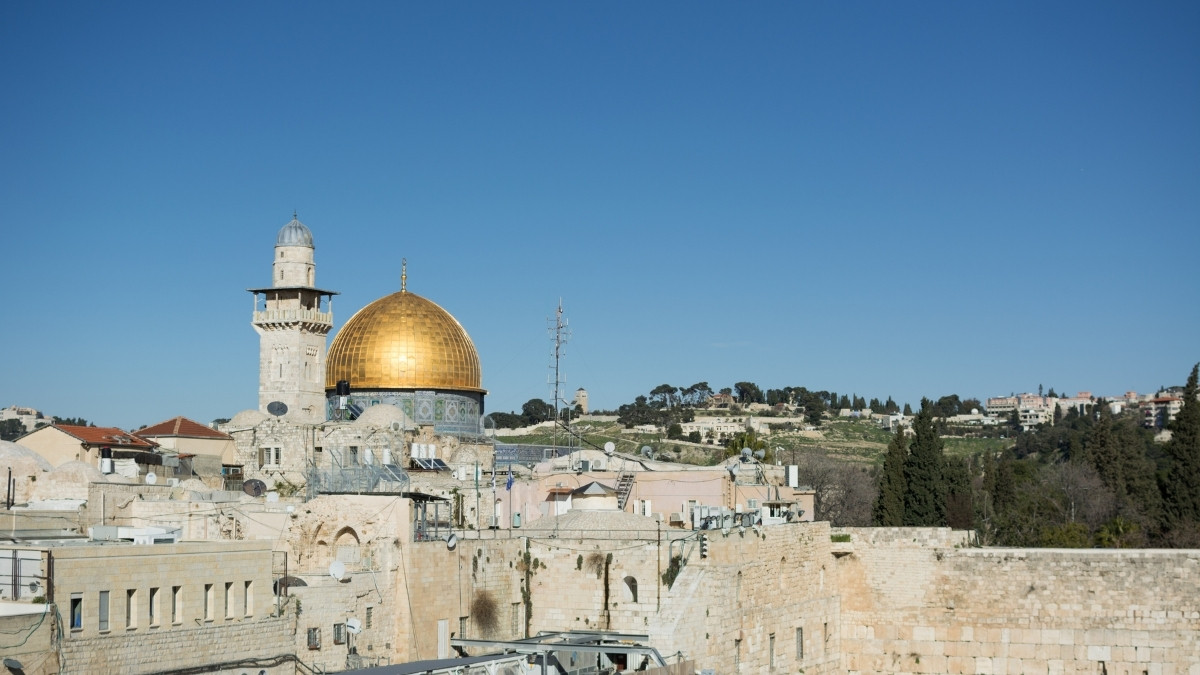
Winter weather in the central West Bank changes dramatically over a very short distance. Jerusalem sits high in the Judean Mountains, while Jericho lies deep in the Jordan Rift Valley near the Dead Sea. The elevation difference of more than 1,000 meters creates two very different winter climates only about 25 kilometers apart.
This sharp drop in elevation explains why Jerusalem can experience cold rain or even occasional snow while Jericho remains warm and dry.
Jerusalem’s High-Elevation Winter Climate
Jerusalem is located about 750–800 meters above sea level, which exposes the city to cooler Mediterranean winter systems moving in from the west.
Typical winter conditions in Jerusalem include:
- Average daytime temperatures: 8°C to 13°C
• Night temperatures: 3°C to 7°C
• Occasional cold waves dropping temperatures near 0°C
• Periodic snowfall during strong winter storms
• Frequent rainfall between December and February
Cold air moving across the Mediterranean Sea often rises over the Judean Hills, producing cloud formation and precipitation over Jerusalem.
Local residents sometimes refer to intense winter storms as “Eastern Mediterranean winter systems,” which can bring heavy rain and strong winds.
Jericho’s Below-Sea-Level Desert Winter
Jericho sits roughly 250 meters below sea level, making it one of the lowest cities on Earth. The city lies within the Jordan Rift Valley, where desert air dominates much of the year.
Because of its low elevation and sheltered valley location, Jericho remains significantly warmer in winter.
Typical winter conditions in Jericho include:
- Average daytime temperatures: 17°C to 22°C
• Night temperatures: 8°C to 12°C
• Very rare frost events
• Much lower rainfall compared to Jerusalem
• Mostly sunny winter days
While Jerusalem may experience cold rain, Jericho often enjoys mild, almost spring-like weather during the same storm system.
The 1,000 Meter Elevation Drop and Its Weather Impact
The road from Jerusalem down to Jericho drops about 1,000 meters in elevation within less than an hour of driving. This dramatic descent is one of the steepest climate transitions in the Middle East.
Weather differences caused by the elevation drop include:
- Temperature increases by 8–12°C between the two cities
• Rainfall decreases significantly toward the valley
• Humidity rises closer to the Dead Sea
• Air pressure increases at lower elevations
Meteorologists often describe this transition as moving from a Mediterranean mountain climate to a desert valley climate.
Why Snow in Jerusalem Rarely Reaches Jericho
Snow occasionally falls in Jerusalem during strong winter cold outbreaks, but Jericho almost never sees snow.
Several factors prevent snow in Jericho:
- Very low elevation below sea level
• Warmer desert air trapped in the valley
• Higher atmospheric pressure
• Limited cold-air pooling
Even during historic snow events in Jerusalem, Jericho usually experiences cool rain or simply cloudy skies.
Microclimates Across the Judean Desert
The area between the two cities forms the Judean Desert, which creates additional microclimates.
Travelers can notice these rapid changes:
- Mountain fog and drizzle near Jerusalem
• Dry desert winds halfway down the slope
• Warm sunshine near Jericho and the Dead Sea
This short geographic corridor is often used by meteorologists to demonstrate how topography strongly controls weather patterns in the Middle East.
What Travelers Should Expect in Winter
Visitors moving between Jerusalem and Jericho in winter should prepare for rapid temperature changes.
Important things to remember:
- Dress in layers if traveling between both cities
• Mountain areas can feel 10°C colder than the valley
• Rain gear may be necessary in Jerusalem
• Sunglasses and lighter clothing may be comfortable in Jericho
This dramatic shift is one of the most fascinating weather contrasts in the region.
Final Weather Insight
When traveling from Jerusalem down to Jericho during winter, you are not just changing cities—you are entering a completely different climate zone within less than an hour.