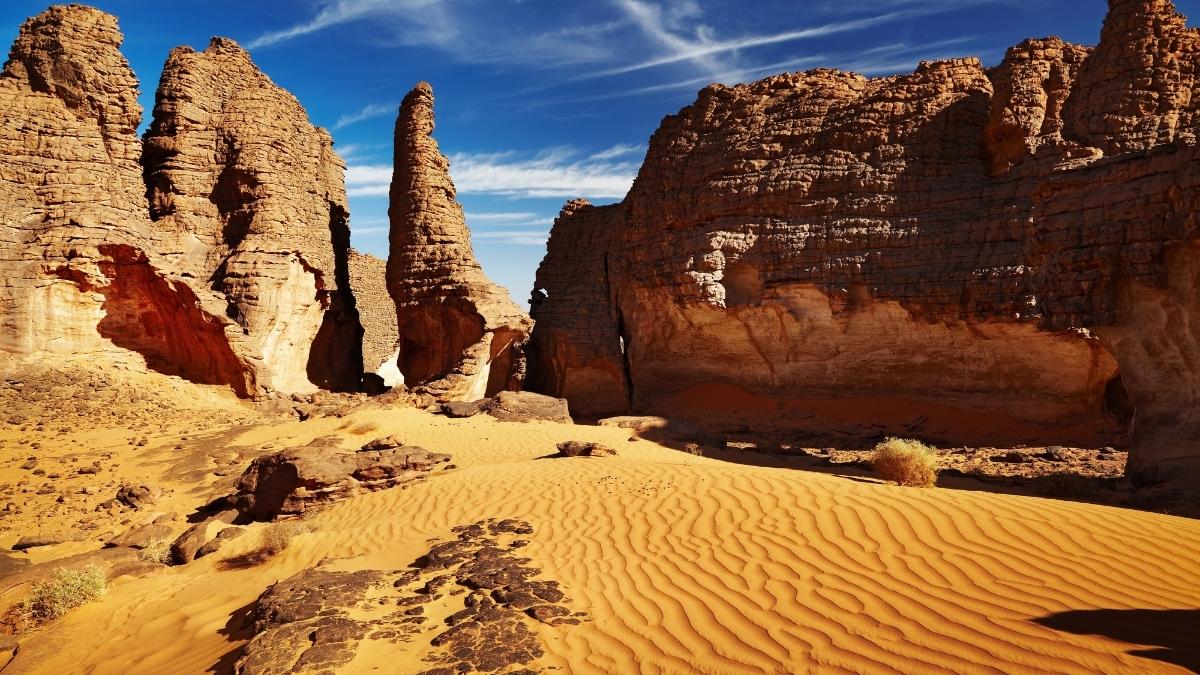
Tassili n’Ajjer, located in southeastern Algeria near the borders of Libya and Niger, is one of the Sahara’s most striking high desert plateaus. Rising between 1,000 and 2,000 meters above sea level, the region experiences dramatic temperature swings, extremely dry air, and powerful desert winds.
Understanding the weather patterns of Tassili n’Ajjer is essential for travelers, trekkers, and researchers visiting this remote UNESCO World Heritage landscape.
Climate Overview of Tassili n’Ajjer
The climate of Tassili n’Ajjer is classified as hyper-arid desert. Rainfall is extremely rare and often unpredictable.
Key climate characteristics include:
- Annual rainfall: typically less than 50 mm
• Very low humidity year-round
• Large temperature differences between day and night
• Frequent desert winds carrying sand and dust
Because of its elevation, the plateau is slightly cooler than surrounding Sahara lowlands such as Djanet.
Seasonal Weather Patterns
Weather conditions in Tassili n’Ajjer vary significantly between seasons.
Summer, June to September
This is the hottest period, when daytime temperatures can become extreme.
Typical conditions:
- Daytime temperatures: 38°C to 45°C
• Night temperatures: 20°C to 27°C
• Intense solar radiation and dry winds
• Occasional dust storms
Outdoor exploration during midday is strongly discouraged due to heat stress risks.
Autumn, October to November
Autumn is one of the most comfortable times to visit.
Typical conditions:
- Daytime temperatures: 24°C to 32°C
• Night temperatures: 12°C to 18°C
• Clear skies and stable weather
• Reduced wind activity
This season is popular for trekking and desert expeditions.
Winter, December to February
Winter in the high desert plateau can be surprisingly cold, especially at night.
Typical conditions:
- Daytime temperatures: 15°C to 22°C
• Night temperatures: 2°C to 8°C
• Occasional frost in sheltered valleys
• Calm mornings with crisp desert air
Warm clothing is essential due to the sharp overnight cooling.
Spring, March to May
Spring brings stronger winds across the Sahara, including dust-carrying systems.
Typical conditions:
- Daytime temperatures: 25°C to 35°C
• Night temperatures: 10°C to 18°C
• Increasing wind activity
• Possible dust haze
These winds are sometimes linked to regional Saharan circulation patterns similar to the well known Ghibli or Khamsin winds found across North Africa.
Wind and Sandstorm Risks
Wind is a defining weather factor in Tassili n’Ajjer. Strong desert gusts can lift sand and reduce visibility across the plateau.
Common wind characteristics include:
- Afternoon gusts reaching 40 to 60 km/h
• Dust haze during spring months
• Sand accumulation in canyon passages and rock arches
Travelers should always check local forecasts in Djanet before entering the plateau.
Best Months to Visit Tassili n’Ajjer
Weather conditions are most favorable during the cooler seasons.
Recommended travel months:
- October
• November
• February
• March
During these periods, temperatures remain manageable and wind activity is usually lower.
Avoid visiting in July and August unless you are experienced with extreme desert conditions.
Weather Challenges on the Plateau
The unique geography of Tassili n’Ajjer creates microclimates among its sandstone formations.
Common weather challenges include:
- Rapid cooling after sunset
• Dehydration due to dry desert air
• Sudden dust gusts in narrow rock corridors
• Limited natural shade during midday
Visitors trekking between rock forests and canyons must carry sufficient water and sun protection.
Why Weather Awareness Matters in Tassili n’Ajjer
The remote nature of this Saharan plateau means weather conditions directly affect safety. Temperatures, wind, and dehydration risks can escalate quickly if travelers are unprepared.
Before exploring Tassili n’Ajjer:
- Monitor regional weather updates
• Travel with experienced desert guides
• Carry extra water and protective clothing
• Avoid hiking during peak afternoon heat