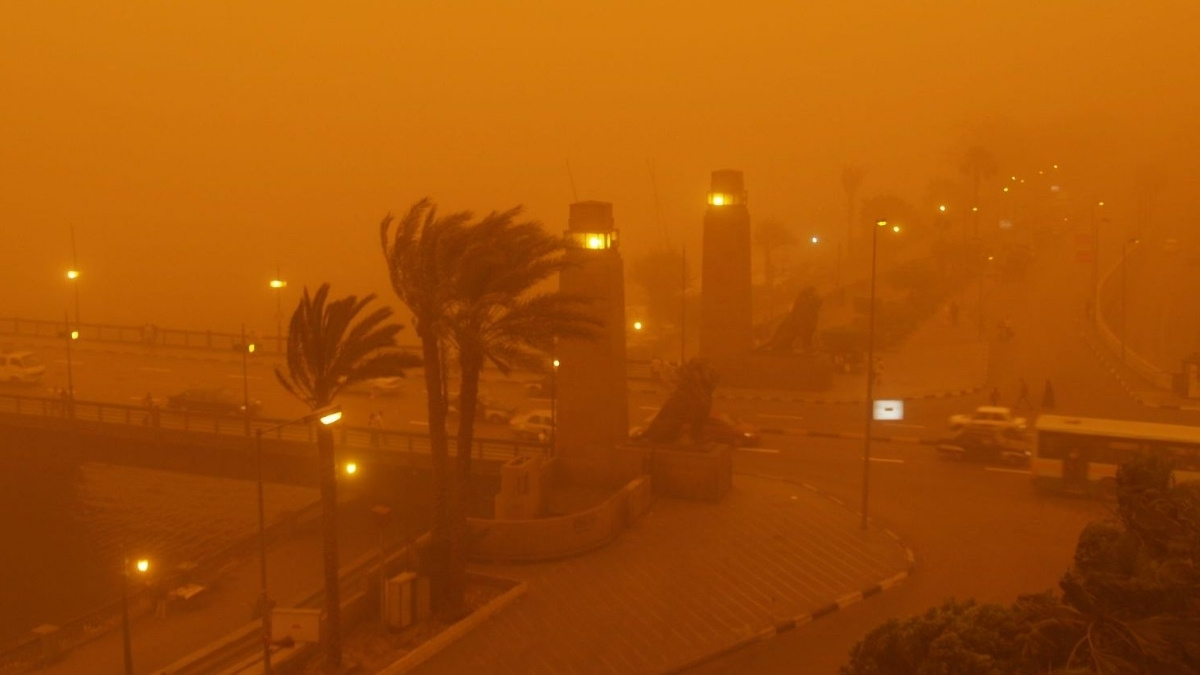
What Are the Khamaseen Winds
The Khamaseen winds are one of the most intense seasonal weather events affecting Cairo and much of Egypt. These hot, dry, dust-laden winds typically occur during the spring months, especially between March and May.
The term “Khamaseen” comes from the Arabic word for “fifty,” referring to the roughly fifty-day period when these winds may occur intermittently. During this time, strong southerly or southwesterly winds sweep across the Sahara Desert and push massive clouds of dust toward Cairo.
Temperatures can rise suddenly during a Khamaseen event. It is common for temperatures in Cairo to jump from around 25°C to 38°C or even 40°C within hours.
Why Cairo Is Vulnerable to Khamaseen Dust Storms
Cairo sits near the edge of the Sahara Desert and lies directly in the path of desert air masses moving north toward the Mediterranean. When a low-pressure system forms over North Africa, it pulls hot desert air toward Egypt.
This weather pattern creates powerful dust storms that can rapidly reduce visibility across the city.
Common impacts in Cairo include
- Visibility dropping below 500 meters
• Thick dust covering streets, cars, and buildings
• Sudden temperature spikes above 35°C
• Air quality reaching hazardous levels
These storms can disrupt daily life in the Egyptian capital, especially during peak spring travel and tourism periods.
Signs a Khamaseen Storm Is Approaching
Residents of Cairo often notice several warning signs before a Khamaseen dust storm arrives.
Typical indicators include
- A sudden rise in temperature and dry heat
• Strong gusty winds from the south or southwest
• A yellow or orange haze appearing on the horizon
• Rapidly worsening air quality
In many cases, the sky turns a dusty brown color as sand and fine desert particles fill the atmosphere.
Health Risks During Khamaseen Dust Storms
Khamaseen winds carry extremely fine dust particles that can easily enter the respiratory system. This makes the storms particularly dangerous for children, the elderly, and people with asthma or lung disease.
Common health effects include
- Eye irritation and dryness
• Breathing difficulties
• Persistent coughing
• Increased asthma attacks
Hospitals in Cairo often see a noticeable increase in respiratory cases during severe dust storm events.
Practical Dust Storm Survival Tips for Cairo Residents
Preparing for a Khamaseen dust storm can significantly reduce health risks and disruptions.
Key safety steps include
- Stay indoors as much as possible during peak dust conditions
• Close windows and doors tightly to keep dust outside
• Use air purifiers or air conditioning if available
• Wear a protective mask when going outdoors
• Drink plenty of water to prevent dehydration
Drivers should also be cautious, as visibility can drop quickly on Cairo’s busy roads.
How Long Do Khamaseen Winds Last
A single Khamaseen dust storm typically lasts several hours, but stronger events can persist for one to two days. The winds usually weaken once the weather system moves eastward toward the eastern Mediterranean.
After the storm passes, temperatures often drop sharply and cooler air returns to Cairo.
Climate Trends and Increasing Dust Storm Concerns
Meteorologists across the Middle East and North Africa have observed that dust storms are becoming more frequent in some regions. Rising temperatures, prolonged drought, and desert expansion may be increasing the amount of loose dust available for storms.
For a rapidly growing city like Cairo, this means that managing air quality and public safety during Khamaseen events is becoming increasingly important.
Final Safety Reminder
Khamaseen winds are a natural part of Egypt’s climate, but their impact on Cairo can be severe.