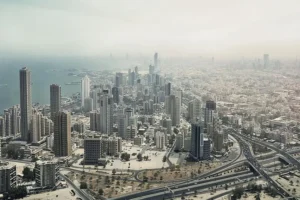
When the air temperature in Manama reaches 35°C in summer, the “feels like” temperature often climbs to 44–47°C. The reason is not extreme heat alone, but Bahrain’s persistently high humidity driven by the warm waters of the Persian Gulf.
From June to September, relative humidity frequently exceeds 70 percent at night and remains above 50–60 percent during the day. Combined with light winds and urban heat retention, this creates intense thermal discomfort across the island.
Why 35°C Feels Like 45°C in Bahrain
Humidity limits the body’s ability to cool itself.
Sweat evaporates more slowly when moisture levels are high. As a result, the human body retains heat, raising the perceived temperature well above the actual air reading.
Key factors behind Bahrain’s high heat index include:
- Sea surface temperatures in the Gulf often exceeding 32–34°C in peak summer
• Light to moderate easterly and southeasterly winds carrying moist maritime air
• Urban heat island effect in central Manama
• High nighttime humidity preventing the body from recovering after sunset
In practical terms, 35°C with 70 percent humidity can produce a heat index near 45°C.
The Role of the Persian Gulf
Bahrain’s geography makes humidity unavoidable.
As a low lying island nation surrounded by shallow, warm Gulf waters, evaporation rates are extremely high during summer. This moisture accumulates in the lower atmosphere, especially during calm conditions.
Unlike inland desert cities such as Riyadh where heat is dry, Bahrain’s climate is maritime tropical in summer. The moisture laden air amplifies discomfort even when temperatures are lower than regional peaks.
Summer Weather Patterns in Manama
Typical summer conditions in Bahrain include:
- Daytime highs between 34°C and 38°C
• Nighttime lows around 30°C to 33°C
• Dew points often above 25°C
• Heat index frequently exceeding 45°C
Dew points above 24°C are considered oppressive. In Manama, they are common for weeks at a time during July and August.Local residents often describe these conditions as suffocating heat, particularly in early mornings before sunrise when humidity peaks.
Why Nights Feel Worse Than Days
Many assume the worst heat occurs at midday. In Bahrain, nighttime humidity can make early morning hours more uncomfortable.
After sunset, temperatures drop slightly but moisture levels rise. When wind speeds weaken, stagnant humid air traps heat close to the surface.
This is why 32°C at 4 am can feel heavier and more exhausting than 36°C in the afternoon.
Health Risks During High Humidity Events
High humidity combined with temperatures above 35°C increases the risk of:
- Heat exhaustion
• Heat cramps
• Dehydration
• Reduced work productivity outdoors
Construction and outdoor workers are particularly vulnerable during prolonged humid heat spells. Even short exposure can lead to rapid fatigue.
Climate Change and Rising Heat Stress
Recent years have shown more frequent extreme heat index events across the Gulf region. Warmer sea temperatures mean higher atmospheric moisture capacity.
This trend increases the likelihood that 35°C days in Bahrain will continue to feel like 45°C or higher in coming summers.
How to Stay Safe in Manama’s Humid Heat
During Bahrain’s peak humidity season:
- Limit outdoor activity between 11 am and 4 pm
• Drink water consistently, not just when thirsty
• Wear light colored, breathable clothing
• Use air conditioning or shaded, ventilated spaces whenever possible
Even if the thermometer reads 35°C, always check the heat index. In Manama, humidity can silently push conditions into dangerous territory.