While many dismiss Egypt’s climate as a binary of “hot” and “hotter,” the reality is far more nuanced. From the humid Mediterranean breeze in the north to the blistering Saharan heat of the south, Egypt’s weather is shaped by its unique geography. For the readers of ArabForecast247.com, understanding these shifts is essential for planning a comfortable and safe journey through the Land of the Pharaohs.
The Geography of Heat: More Than Just Desert
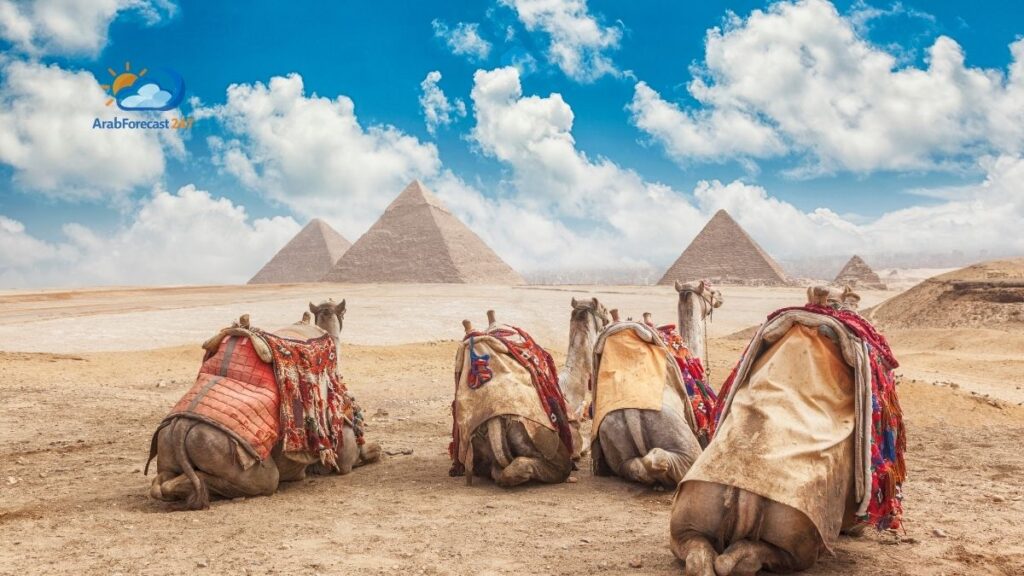
Despite 95% of the country being arid desert, nearly the entire population resides within the fertile Nile Valley and Delta. This narrow green strip offers a slightly more stable climate than the surrounding wilderness. While rainfall remains a rarity nationwide occurring almost exclusively during the brief winter window the transition between the Mediterranean coast and the inland heat creates distinct weather zones.
Cairo: The Heart of the Delta
The capital city experiences a wide thermal range. While winters are mild, summers can be intense.
- The Sizzle Factor: July and August are the peak of summer, with highs frequently pushing toward the high 30s. Fortunately, low humidity makes this heat “dry,” though the combination of urban density and the afternoon sun can be taxing.
- The Dust Season: During March and April, be prepared for the Khamsin. This hot, sand-laden wind blows in from the Sahara, significantly dropping visibility and spiking temperatures rapidly.
| Season | Avg High | Avg Low |
| Spring (Mar-May) | 27°C | 15°C |
| Summer (Jun-Aug) | 34°C | 21°C |
| Autumn (Sep-Nov) | 28°C | 17°C |
| Winter (Dec-Feb) | 18°C | 9°C |
Alexandria: The Mediterranean Refuge
For those seeking a reprieve from the inland intensity, Alexandria is the premier choice. The “Pearl of the Mediterranean” benefits from constant sea breezes that keep summer temperatures significantly lower than in Cairo or Aswan.
Pro Tip: If you are visiting for the water, August is the peak month for swimming, with sea temperatures averaging a comfortable 26°C.
| Season | Avg High | Avg Low |
| Spring (Mar-May) | 23°C | 14°C |
| Summer (Jun-Aug) | 29°C | 21°C |
| Autumn (Sep-Nov) | 26°C | 17°C |
| Winter (Dec-Feb) | 17°C | 9°C |
Aswan: The True Saharan Experience
Aswan (alongside Luxor) represents Egypt at its most extreme. This is a true hot desert climate where rainfall is a generational event—averaging less than 1mm annually.
- Summer Survival: With average highs hitting $41^\circ\text{C}$ ($106^\circ\text{F}$) in the summer, outdoor sightseeing should be restricted to the very early morning or late evening.
- The Ideal Window: Winter in Aswan is short and pleasantly warm, making it the gold standard for winter sun seekers.
| Season | Avg High | Avg Low |
| Spring (Mar-May) | 34°C | 18°C |
| Summer (Jun-Aug) | 41°C | 25°C |
| Autumn (Sep-Nov) | 35°C | 20°C |
| Winter (Dec-Feb) | 24°C | 10°C |
Hurghada: Subtropical Red Sea Bliss
On the eastern coast, Hurghada offers a subtropical-desert hybrid climate. The Red Sea acts as a thermal regulator, keeping the water a consistent 24°C year-round.
- Best Time to Visit: To avoid the peak crowds and the mid-summer “oven” effect, aim for late spring or early autumn. The weather remains warm enough for diving but mild enough for desert excursions.
| Season | Avg High | Avg Low |
| Spring (Mar-May) | 29°C | 19°C |
| Summer (Jun-Aug) | 35°C | 25°C |
| Autumn (Sep-Nov) | 29°C | 20°C |
| Winter (Dec-Feb) | 22°C | 12°C |
Expert Travel Advice: Beating the Heat
Navigating Egypt’s climate requires more than just sunscreen.
- Hydration is Non-Negotiable: In the dry heat of Upper Egypt (Aswan/Luxor), you may not notice how much you are sweating. Drink water constantly.
- The Khamsin Alert: If traveling in the spring, monitor local forecasts for the Khamsin. If a dust storm is predicted, travelers with respiratory issues should stay indoors and use high-quality masks.
- Dress for the Sun: Opt for loose-fitting, light-colored linens. This allows airflow while protecting your skin from the intense UV radiation.