While the rest of the Arabian Peninsula grapples with temperatures exceeding 45°C during the summer months, the city of Salalah in the Dhofar Governorate undergoes a radical transformation. This phenomenon, known as the Khareef (monsoon) season, turns a vast desert landscape into a lush, emerald-green paradise from late June through early September.
The Science Behind the Greenery: The Indian Ocean Monsoon
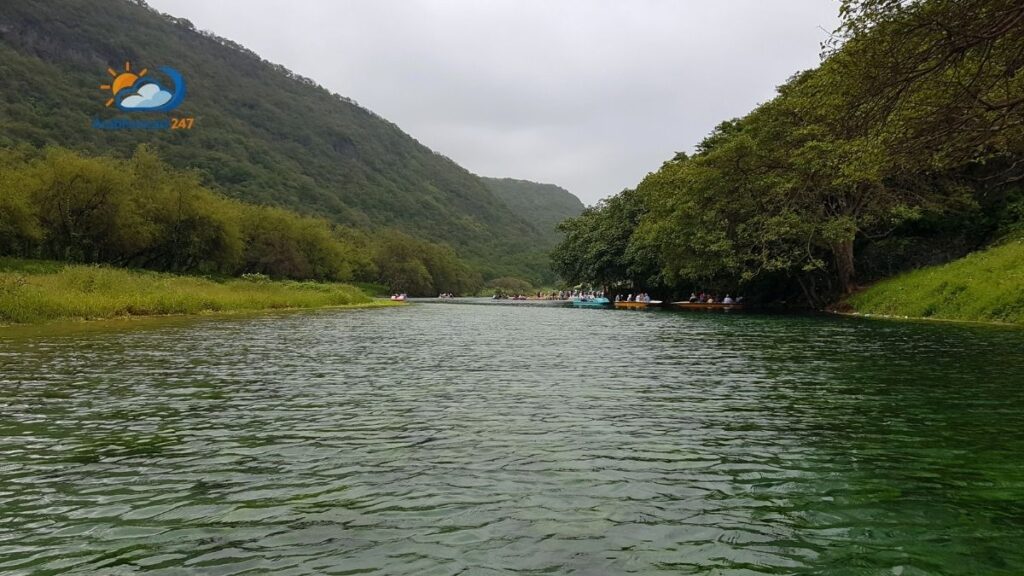
The Khareef is not a typical storm-driven rain season. Instead, it is characterized by a persistent, cool drizzle and thick fog. This occurs due to the “Upwelling” of cold water in the Arabian Sea, which cools the moisture-laden winds blowing toward the coast.
As these winds hit the Al Qara Mountains (Jabal Al Qara), the air is forced upward, creating a blanket of mist and light rain that rarely stops for three months. While Muscat and Riyadh bake in the sun, Salalah maintains a steady, refreshing temperature between 20°C and 25°C.
What to Expect During the Season
The Khareef affects the regional micro-climate in several distinct ways that tourists and residents should prepare for:
-
Continuous Mist (Butur): The local term for the fine mist that coats the mountains. It is enough to saturate the ground without the intensity of a tropical downpour.
-
Wadis and Waterfalls: Dormant springs like Wadi Darbat and Ayn Athum come to life, creating dramatic waterfalls that flow into the lush valleys below.
-
Coastal Swells: The sea becomes extremely rough during this period. The Al Mughsail blowholes become a major attraction as the high tide and strong waves force seawater through the natural vents in the limestone.
Navigating the Dhofar Terrain
The unique weather conditions create specific challenges for those traveling between northern Oman and the south.
-
Visibility Issues: The fog on the mountain passes (especially on the road from Haima to Salalah) can reduce visibility to less than 10 meters.
-
The “Safar” Wind: Occasionally, dry winds from the Empty Quarter (Rub’ al Khali) attempt to push south, creating a brief clash of air masses that can lead to dusty conditions before the mist settles back in.
Travel & Safety Insight
Driving through the Al Qara Mountains during the peak of Khareef requires extreme caution. The roads are often slippery due to the constant drizzle and moss growth. Ensure your vehicle’s fog lights are functional and your tires have sufficient tread for wet surfaces. Most importantly, stay clear of the cliff edges during heavy fog, as the terrain can be deceptively steep beneath the mist.