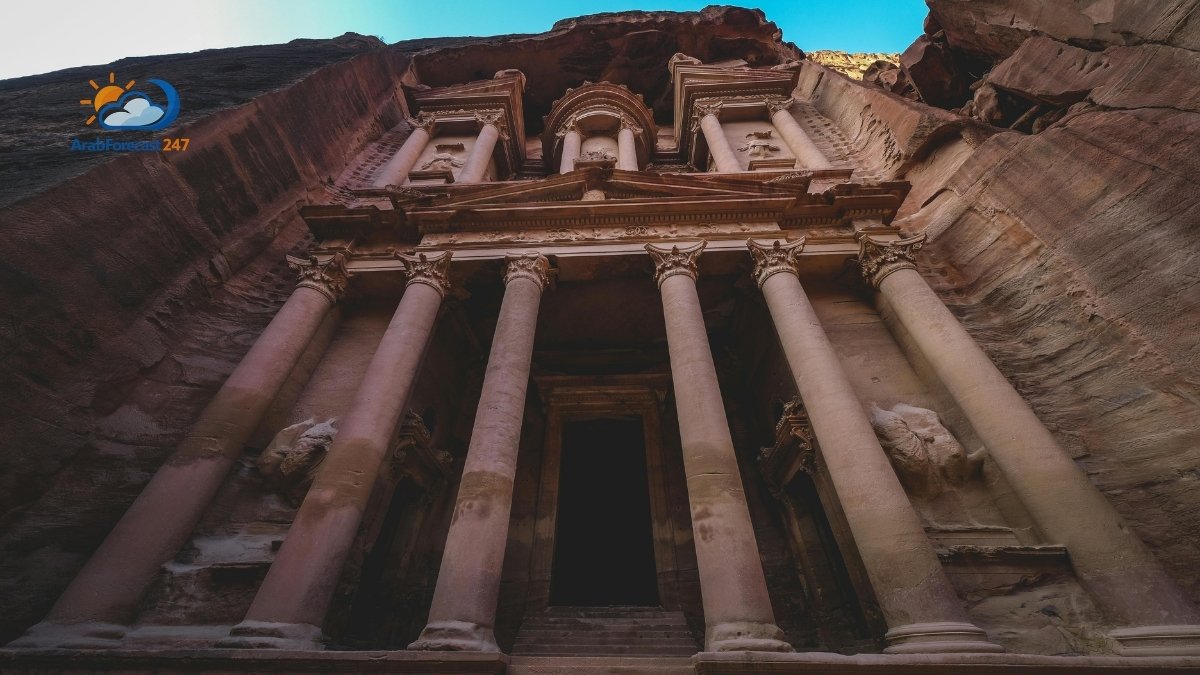
Petra, the Rose City of Jordan, is a high-desert environment where the terrain is as challenging as the climate is variable. For hikers planning to conquer the Monastery trail or the High Place of Sacrifice, understanding the seasonal shifts is vital for both safety and comfort.
Winter: The Season of Dramatic Skies (December – February)
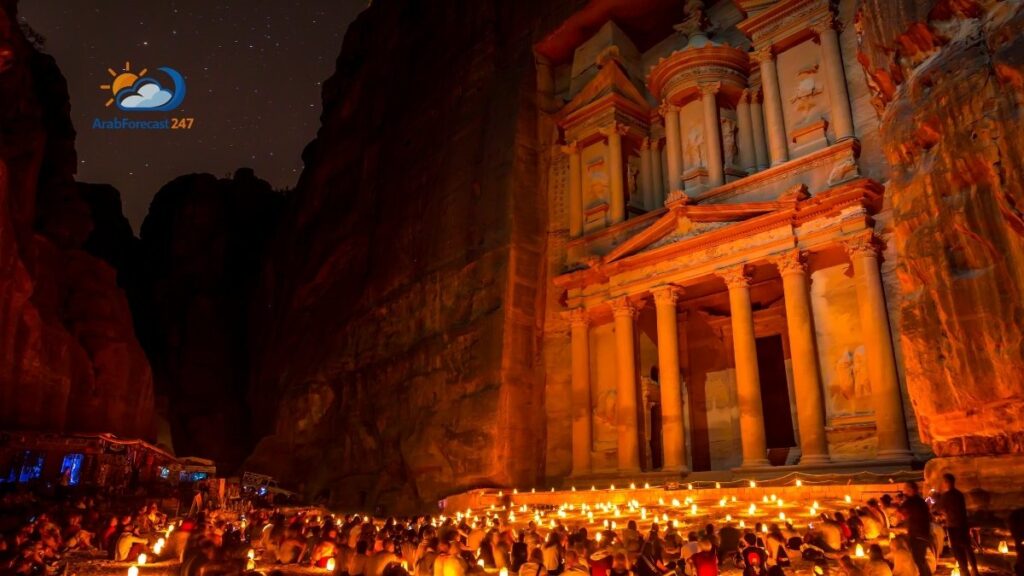
Winter in Petra is cold, and the chance of rain is at its highest. While the crowds are thinner, hikers must be prepared for freezing nighttime temperatures and occasional flash flood risks in the narrow Siq.
- December & January: These are the coldest months. Daytime highs hover around 13°C, but can drop to 2°C at night.
- Petra weather February: February remains chilly but begins to show signs of spring. Expect an average high of 15°C. This is a month of “unpredictability” you might experience a crisp sunny day followed by a sudden downpour.
- Petra hiking tips rain: Always check the local forecast before entering the site. If heavy rain is predicted, the archaeological park may close the Siq due to flood risks. Wear waterproof hiking boots with excellent grip, as the sandstone steps become incredibly slippery when wet.
Spring: The Gold Standard (March – May)
Many travelers consider this the best month to visit Jordan. The desert landscape sees a brief burst of greenery, and the temperatures are ideal for long-distance trekking.
- March: The “Khamseen” winds can occasionally bring dust storms from the Arabian Peninsula, but otherwise, the air is mild.
- April & May: These months offer the most stable Jordan climate for tourists. Daytime temperatures range between 22°C and 28°C. It is warm enough for light clothing but cool enough to complete the 800-plus steps to the Monastery without heat exhaustion.
Summer: The Desert Heat (June – August)
Summer in the Ma’an Governorate is harsh. The sun reflects off the red sandstone, intensifying the heat within the canyons.
- June – August: Temperatures frequently soar above 35°C.
- Hiking Strategy: If you visit during this window, start your hike at 6:00 AM. Avoid being on the exposed trails between 12:00 PM and 4:00 PM. Dehydration is a serious risk, as the dry desert air evaporates sweat instantly.
Autumn: The Second Peak (September – November)
As the summer heat retreats, Petra enters its second peak season. The atmosphere is generally clearer than in the spring, making it a favorite for photographers.
- September: Still quite warm, similar to June.
- October & November: Transition months where the weather settles into a comfortable 20°C to 25°C range. By late November, the first winter rains begin to appear, and evenings turn sharply cold.
Quick Reference: Average Temperatures
| Month | Avg. High (°C) | Avg. Low (°C) | Rain Risk |
| Jan – Feb | 13 – 15 | 2 – 4 | High |
| Mar – May | 19 – 28 | 7 – 12 | Low |
| Jun – Aug | 32 – 36 | 16 – 19 | None |
| Sep – Nov | 22 – 31 | 9 – 15 | Moderate |
Safety Insight
When hiking in the desert, remember that temperature regulation is key. Even on a warm afternoon, the shadow of the canyons can feel significantly cooler. Always carry a minimum of 2 liters of water and a lightweight windbreaker, regardless of how clear the sky looks at the start of your journey.